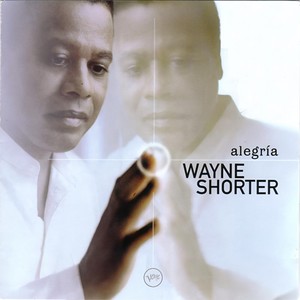
Alegria
With 2002'sFootprints Live, nearly two decades of false alarms about a Wayne Shorter"comeback" finally gave way to the real thing -- at least to many critics who welcomed his return to highly cerebral acoustic post-bop. Yet the follow-up, Alegria -- apparently Shorter's first all-acoustic studio album as a leader since 1967 -- is where Shorter really starts to get creative again. The rhythm section fromFootprints Live-- pianistDanilo Perez, bassistJohn Patitucci, and drummerBrian Blade-- is intact on three tracks. On others,Brad Mehldau-- with his very different conception of sound -- is the pianist,Terri Lyne Carringtonsubs on drums,Alex Acunaadds percussion, and new, unusual timbres are supplied by a wind/brass ensemble. As onFootprints Live, Shorter revisits some old tunes from his relative youth, but not nearly in the same way. In"Orbits," which was given a racetrack post-bop run bythe Miles Davis Quintet, Shorter slows it way, way down, virtually decontructing the tune, backed by a quizzical chart for winds and brass. Likewise,"Angola" and"Capricorn II" are altered nearly beyond recognition. Indeed, at this point in the 21st century, it was fascinating to see both Shorter and his formerDavisbandmate,Herbie Hancock, radically reinterpreting their past, working separately yet often using the same bassist and drummer (PatitucciandBlade) and recording for the same label. Yet, the core message of this album is that Shorter was ready to move on to different things, drawing material from almost anything that caught his attention while soloing in top form on tenor and soprano saxes. With a wild soprano wail, Shorter leads off the CD with his new, absorbing boogaloo"Sacajawea," one that soon morphs into searching, nearly free jazz, with a magisterial solo from the composer. At last, someone in jazz chose to deal with both tunes fromLeroy Anderson's Spanish-flavored light classical masterpiece"Serenata" rather than just the lush second subject -- and Shorter decorates them with a complex featherweight orchestration. ThoughAcuna's bongos pop away in the foreground, Shorter does maintain the melancholy feeling of the familiar aria fromVilla-Lobos'"Bachianas Brasileiras No. 5," with cellistCharles Curtiseloquently stating the tune, until he destabilizes things in the middle of the track. As he approached his 70th birthday, this disc seemed to confirm a long-awaited creative Indian summer for Wayne Shorter.
